十二怒汉
Macao's roadmap for a more diversified, integrated future_我的网站

一 | 7月20日上午,在国务院新闻办公室举行的新闻发布会上,工信部介绍,今年以来深化拓展“人工智能+”,规模以上制造业企业人工智能技术应用普及率超30%,人工智能开源大模型全球累计下载量突破100亿次。

二 |
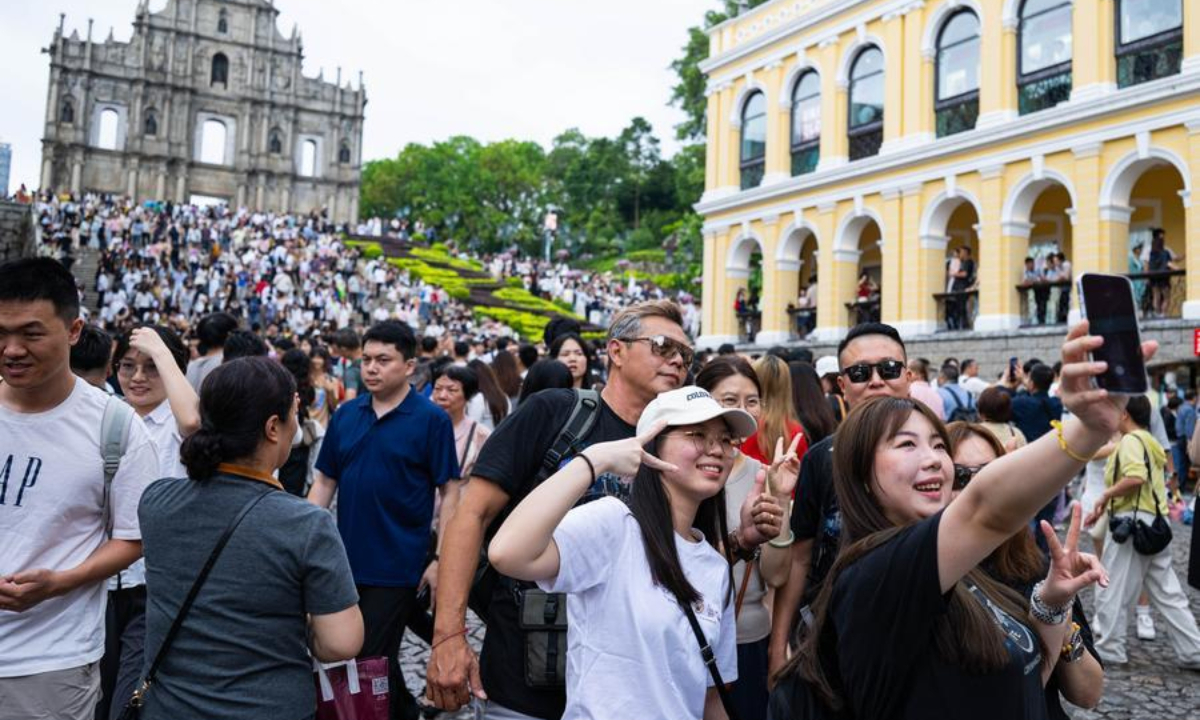
Tourists visit the Ruins of St. Paul's in Macao, south China, May 2, 2026. (Xinhua/Cheong Kam Ka)Nearly three decades after its return to China, Macao continues to explore new ways to sustain stability and prosperity under the "one country, two systems" policy, with successive five-year plans offering a long-term roadmap for its development.
Macao and its neighbor Hong Kong are China's two special administrative regions (SARs) governed under the "one country, two systems" policy. This arrangement, in place since China resumed the exercise of sovereignty over the two cities in the late 1990s, allows them to maintain their capitalist systems and ways of life within socialist China.
The third five-year plan of the Macao SAR, unveiled on Tuesday, sets out policy priorities for the next stage, focusing on economic diversification, social progress, and closer integration into national development, while ensuring security.
Since its return to China in 1999, Macao has evolved from a city once associated largely with casinos and gangster films into a vibrant international hub with a dynamic economy, a low crime rate and an increasingly comprehensive social welfare system. It now ranks among the world's wealthiest economies in terms of GDP per capita.
With the plan, the SAR government is proactively positioning Macao within the broader context of national development and actively implementing the relevant arrangements of the country's 15th Five-Year Plan (2026-2030), said Macao SAR Chief Executive Sam Hou Fai.
ECONOMIC DIVERSIFICATION
Economic diversification has remained a central theme throughout Macao's three five-year plans, from the first plan unveiled in 2016 to the latest one.
Sam said economic diversification is essential to sustaining Macao's long-term prosperity and stability and is a task the SAR government must tackle, no matter how difficult it may be.
According to Sam, the Macao SAR government will advance economic diversification through major projects and a government guidance fund to build Macao into a world tourism and leisure center and develop its priority industries, namely, big health, modern finance, high technology, exhibition and convention, as well as culture and sports.
The plan sets the target of raising the share of value added from non-gaming industries to around 60 percent of Macao's GDP by 2030.
Cheong Chok Man, director of the Policy Research and Regional Development Bureau under the Macao SAR government, said that setting such a target means Macao will need to intensify its efforts to achieve greater economic diversification.
Major projects aimed at promoting economic diversification during the period are expected to involve around 130 billion patacas (about 16.1 billion U.S. dollars) in budgeted investment.
For a small economy like Macao with a GDP of roughly 50 billion U.S. dollars in 2025, the investment represents a significant commitment, said Lao Chi Ngai, president of the Macao Economic Association.
BROADER INTEGRATION
The plan is designed to advance the high-quality development of the Guangdong-Macao In-Depth Cooperation Zone in Hengqin.
Located in Zhuhai, Guangdong Province, Hengqin is separated from Macao by a narrow stretch of water. The cooperation zone was established in 2021 to create new space for Macao's development.
This year marks a crucial period for the zone's second phase of development. The latest five-year plan calls for addressing challenges through reform and advancing deeper integration between Macao and Hengqin, with science and technology and education serving as key drivers.
The plan sets quantitative targets in areas including industrial diversification, cross-border flows of production factors, and the integrated provision and sharing of public services.
Richard W. Hu, dean of the Faculty of Social Sciences at the University of Macau, said the plan moves beyond integration in individual industries toward broader integration encompassing industries, people's livelihoods, talent and governance.
Hengqin is expected to develop into an integrated urban area that serves as an extension of Macao's industries and a vibrant cross-border community. In doing so, it could offer a landmark example of leveraging the institutional strengths of "one country, two systems" to foster closer regional synergy, Hu said.
SECURITY AS FOUNDATION
Alongside economic diversification and regional integration, the latest plan places security among its major priorities.
"Amid a complex and evolving international landscape, Macao faces potential challenges arising from a combination of traditional and non-traditional security risks," said Yin Yifen, director of the Social, Economic and Public Policy Research Center at Macao Polytechnic University.
He said the plan seeks to improve the legal framework and enforcement mechanisms for safeguarding national security, strengthen security governance in emerging areas such as cyberspace, data and artificial intelligence, and further develop smart policing.
It also places emphasis on national security education for young people.
"Making security an integral part of governance in the SAR will help lay a stronger foundation for economic diversification, improved livelihood and deeper integration between Macao and the mainland," Yin said.
。
100亿次的下载量,不仅是一个里程碑式的数据,更是一个清晰的信号——中国的人工智能产业,正在从“跟跑”加速迈向“领跑”的新阶段。

三 |
7月17日,在2026世界人工智能大会开幕前夕,月之暗面发布Kimi K3大模型。

四 | 视觉中国 图
国产AI行业厚积薄发
近年来,AI浪潮席卷而来,一场如火如荼的AI竞赛,正在全球上演。在如此激烈的竞争环境下,一批国产AI产品接连横空出世,走到世界舞台的中央。比如早期的引发全行业关注的“Deepseek时刻”;再如前几天,月之暗面发布的Kimi K3,成为全球首个开源的3万亿级大模型,再次引发了全球科技圈的热议。
这些大模型产品的密集涌现,不是偶然的单点突破,而是国产AI行业厚积薄发的结果。
诚然,中国互联网用户规模大,企业数量多,有市场基数的规模优势。但高达100亿次的下载量,显然无法用人口红利来简单解释。事实上,从硅谷的互联网平台,到欧洲的传统制造工厂,越来越多的海外机构、企业,都纷纷主动选择国产大模型,作为其技术底座。
这一方面是因为,国产大模型通过持续的技术创新,以及积极的开源策略,把价格“打”下来了,降低了使用成本;另一方面,国产大模型在参数、性能、稳定性等各方面,已经建立了独特的竞争优势。
国产AI的这种技术进步,相信普通人也有直观的感受。

五 | 一两年前,AI大模型之于普通人,更多还是“聊天机器人”的概念,再就是能撰写文案、做出漂亮的PPT,更像是一个提升办公效率的辅助工具。但如今AI的技术演进,已经远远超出了这一范畴。
我国规模以上制造业企业普及率超30%的背后,就离不开大模型的支撑,AI开始深入流水线,参与工业质检、流程优化等各个环节。此外,像参与智慧城市的调度管理,甚至进医院帮助医生辅助诊疗等,都成了大模型落地的确定性场景。目前,人工智能不仅创造了1.2万亿的产业规模,还正在赋能千行百业,成为实体经济转型的重要推动力量。

六 |
中国的工业门类齐全,制造业场景丰富,为AI的应用提供了良好的土壤。而大模型的广泛落地,又为AI提供了海量、真实的数据,能够持续反哺大模型的迭代与优化,形成良性循环,为AI产业注入源源不断的竞争力。
是里程碑,更是新起点
当然,在肯定成绩的同时,我们也需保持清醒的认知。人工智能不同于传统产业,它是一个“一日千里”的行业,今天领先的技术路线,过几个月可能也会被新的方案取代。要巩固当前的技术优势,就要保持危机意识,不断推动底层架构和核心算法的创新。
像这次发布会就提到,推动建立算力服务能力评估、算力市场化定价等标准。

七 | 这也是完善AI产业基础设施的重要一步。
算力被视作人工智能行业的“水电煤”,是支撑创新的基础设施,建立市场化的定价标准,让算力像“水电煤”明码标价、按需分配,可以确保算力的供应更加透明、公平,降低中小企业使用AI的门槛,进一步推动产业发展。
另外,发布会还提到,东部、中部、西部、东北地区智算规模占全国比例,分别是55.9%、10.6%、32.6%、0.9%。这一数据也意味着,AI算力资源的分布,仍然存在着较大的地区差距,未来要进一步平衡发展落差,补齐落后区域的短板。

八 |
说到底,人工智能发展的最终目的,不是追求领先的参数、实现惊人的下载量,或者让国产AI产品在排行榜上拿到好看的名次,而是让这项技术真正普惠到全国各地,到各行各业,让每个人都能从中受益。
100亿次下载量,是一个里程碑,更是一个新起点。
未来,在加快技术创新的同时,还要进一步推动AI的应用和普及,不断降低使用门槛。只有让AI像“水电煤”一样,真正进入社会的每一个角落,让普通人“用得上”也能“用得起”好的AI产品,中国的人工智能产业革命才能释放最大的价值。
(“经纬度”系澎湃新闻打造的经济评论IP,用主流媒体新表达助力中国经济话语和中国经济叙事体系建设。

九 | )
海报设计 王璐瑶。
Current article:http://z8hv.cesangrangshunzashuangruijiu.pics/hg6/20260826/788575.html
Published on:13:21:01